The most valuable computation on earth was not produced by a GPU cluster.
It was produced by natural evolution, the biggest training run in history, and its crowning jewel is the human, and more generally mammalian, brain. Until recently, we had no way to learn from it directly. That has changed.
Language modelling captures only a shadow of biological computation. It is why today's LLMs are superhuman on some tasks and brittle on embodied reasoning, agency, and common sense, text encodes only a fraction of what a mind actually does. We train on the signal itself.

A glyph for a continuum.
Our name comes from the two streams of data that we believe matter most:
- Ne(ural) data.
- Coupled with Etho(logical) — i.e. natural behaviour.
Two plausible futures — one worth steering toward.
Without intervention, the default trajectory of AI development bends sharply away from human continuity. Functional Emulation is our attempt to bend it back.
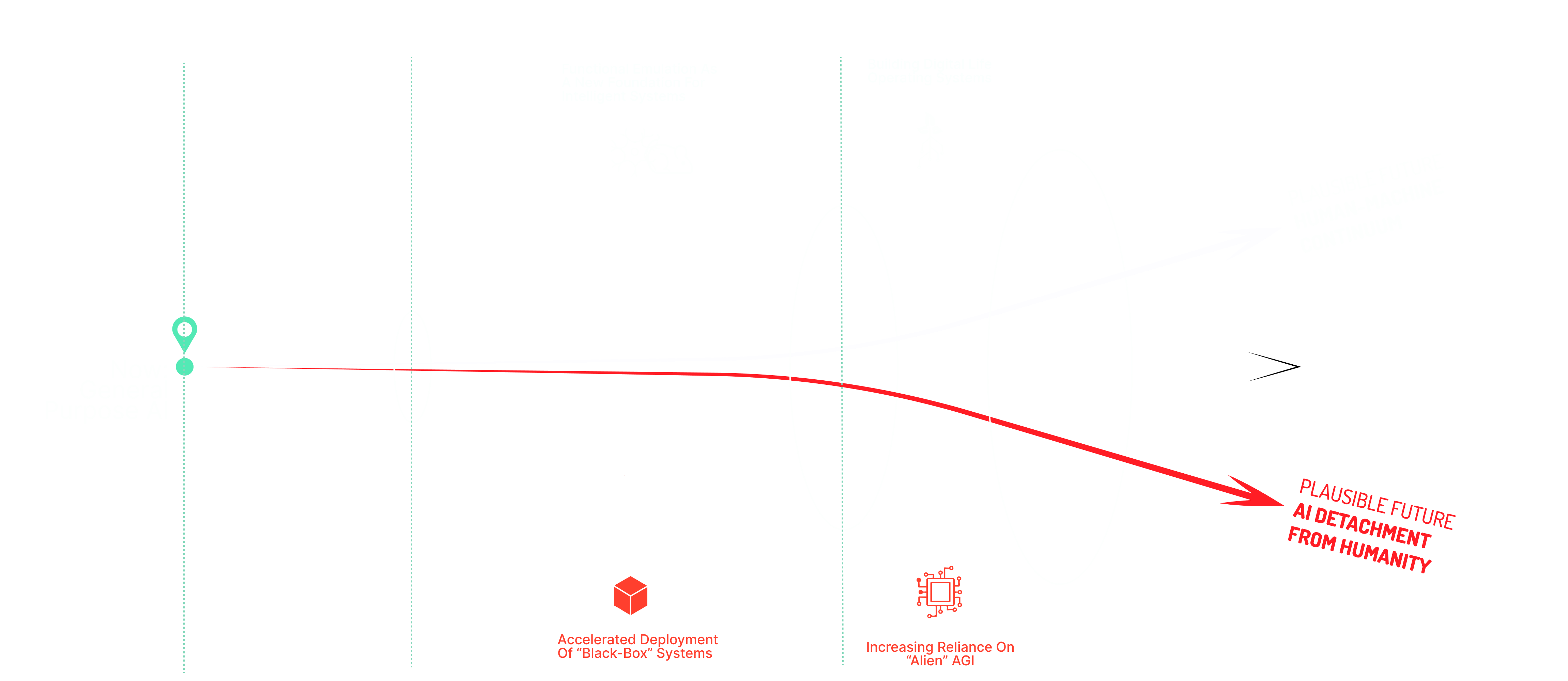
We build a future where human and machine are living in a flourishing continuum as cognition scales.
We call this process Functional Emulation.
At its core, FE is a scaling problem in deep learning: predict the next neural and behavioural state from context, at scale. The tools of modern ML are finally good enough to meet biology where it lives.
Functional Emulation is Netholabs' methodology to achieve aligned AGI, and to contribute toward a substrate-independent humanity, digital minds that carry our values forward when biology alone will not be enough.
We believe this is the shortest credible path to aligned AGI. And we believe the rungs that carry us there make it the most sound and AGI-proof business in the world.
Learn the complete embeddings of neural and ethological data from complex, social, intelligent organisms.
Every other modelling effort at Netholabs feeds into that goal. The capabilities we extract are not incidental, they are the ones 500 million years of evolution have already solved, and that today's systems have not.
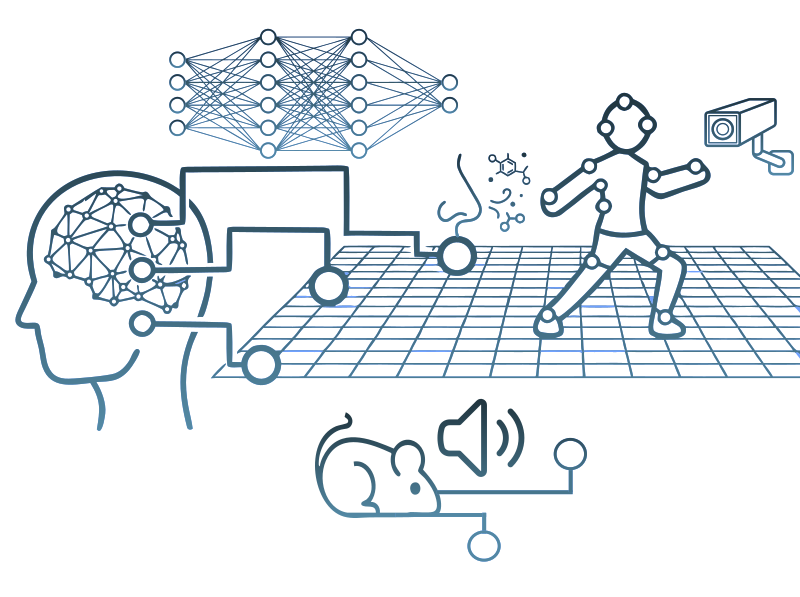
First functional emulation of a mammalian behavioural system.
We start with mouse functional emulation as the first verifiable substrate for industry.
Training signal & inductive biases. Biology's evolved objectives don't reward-hack, and its neural-circuit motifs make learning orders of magnitude more data-efficient — the training signals and priors current AI lacks.
Aligned by construction. Uncertainty awareness, cautious exploration, cooperation — the constraints that make biology safe, inherited through architecture rather than post-hoc patching.
Multi-scale disease models. Alzheimer's, psychiatric disease, and chronic pain — grounded in the neural dynamics that produce them, not the symptoms that describe them.
Physical intelligence. Generalizable motor control and efficient sensing — olfaction, vision, touch — the sensorimotor stack that makes animals competent and LLMs fluent.
-
010–12 monthsFunctional Emulation of a mousePilot projects with industry.
-
02Functional Emulation of a humanFirst functional emulation of human neuro-behavioural dynamics.
-
03MoonshotDigital PeopleThe moonshot: substrate-independent humans at scale.
Netholabs: A Neolab pioneering Functional Emulation.
- 01Capture FE is a scaling problem in deep learning: predict the next neural and behavioural state from context, at scale.
- 02Learn Capture the full joint distribution of brain activity and natural behaviour in freely behaving organisms.
- 03Serve Return protocols, models, and tools back to the human continuum — the three areas Netholabs works across.
We work towards a human-centered future.

Neuroscientist focused on the science of agency, how biological minds initiate free actions, and how any faithful emulation can develop agency circuits for guiding natural behaviour. Has worked on biophysical models of the brain, agency neuroscience, and AI/ML.

Has spent the better part of a decade pushing functional whole-brain emulation from a thought experiment into a tractable engineering program. Repeat founder, moves fluently inside the frontier deep-learning ecosystem, importing frontier methods and securing the compute this work demands.
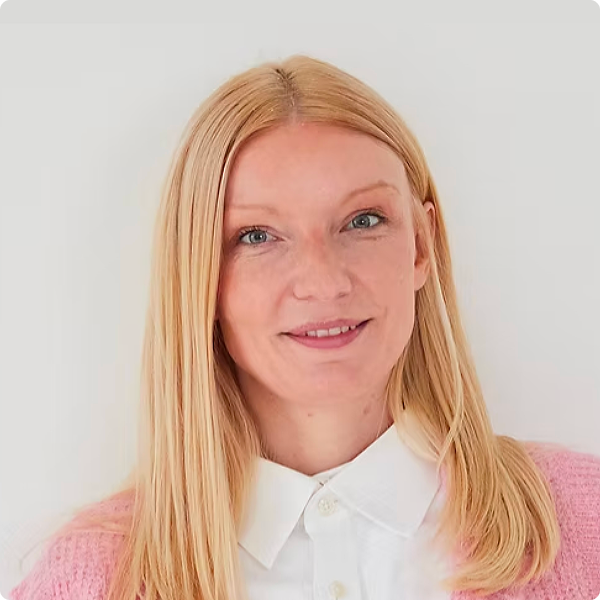
Over a decade building innovation strategy inside organisations that set the pace for it. At Netholabs she translates an extreme scientific ambition into operating structure: runway, hiring, roadmaps, and the partnerships that let the science compound.

Among the most prolific applied ML researchers on Hugging Face, with work ranked in the top 5 of its ecosystem. Has led 400B-parameter physiological foundation-model training runs, bringing the training stack, distributed compute, and architectural judgement that new forms of DL at scale require.
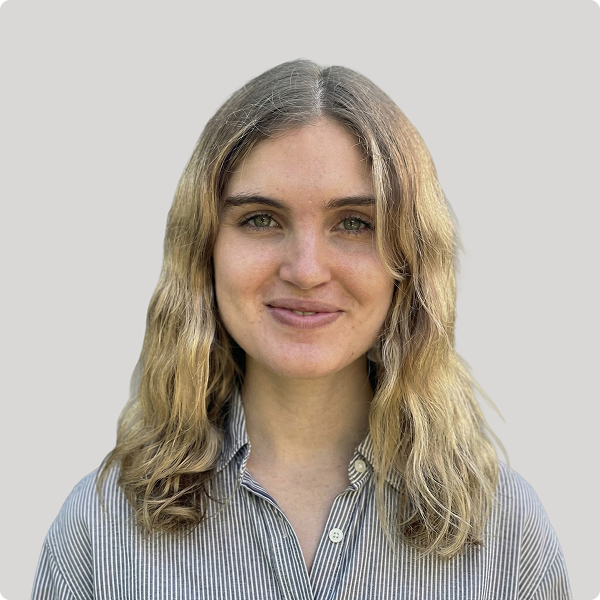
Neuroscientist trained at the intersection of deep learning and systems biology, with experimental work in primate neural recording. Bridges the gap between the biology we are trying to capture and the models we are trying to train, where most of the technical risk of functional emulation actually lives.
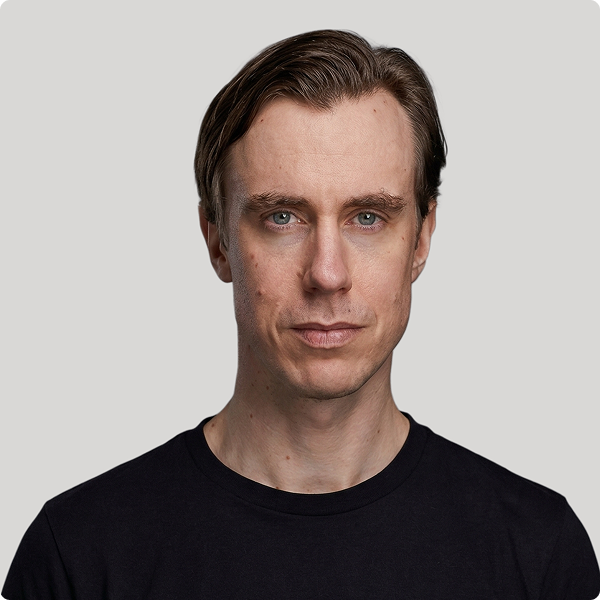
Creator of open-source behavioural-analysis software used across hundreds of neuroscience labs worldwide; one of the leading applied researchers in automated behavioural phenotyping. Leads the ethological pipeline, the "Etho" half of the company's name, turning naturalistic behaviour into training signal.
Advised by world leaders in computational neuroscience, simulation, and computation.
Trained as a computational neuroscientist with Larry Abbott at Columbia, and as a clinical neurologist. Co-founded Herophilus (AI + organoid drug discovery, acquired by Genentech in 2023) and Neuromatch. One of the clearest bridges between systems neuroscience, ML, and company building.
World leader in high-bitrate simulation. Creator of Sample Factory and Megaverse, among the fastest and most widely-used frameworks for high-throughput reinforcement learning and 3D embodied simulation. His work makes it feasible to train agents and emulators against rich virtual environments at the scale Netholabs needs.
World leader in functional neural data. Co-directs Columbia's Center for Theoretical Neuroscience and the Grossman Center for the Statistics of Mind. Laid the statistical foundations for how the field reads meaning out of neural recordings, from spike trains and calcium imaging to large-scale population activity.
World leader in computation. Creator of Mathematica, Wolfram|Alpha, and the Wolfram Language, and intellectual architect of the Principle of Computational Equivalence. His work on computational irreducibility and the Wolfram Physics Project directly shapes how Netholabs thinks about what a mind is and what it takes to emulate one.